
We have been running Icons robotics series this summer. Karol Hausman from Physical Intelligence on the models, Luis Sentis from Apptronik on the machines.
Eric Roselli came to talk about the layer underneath both of them, and it shifted how I think about where value accrues in physical AI. Eric is the co-founder of ZaiNar.
ZaiNar is truly special. They’ve been building in stealth for 9 years with full conviction that their tech is going to change the world. They gathered one of the greatest teams, and now that time has come. It is one of the hottest and greatest companies in physical AI, and their conviction is paying off. The dinner was off the record, but we were able to confirm a few insights that Eric is comfortable sharing.
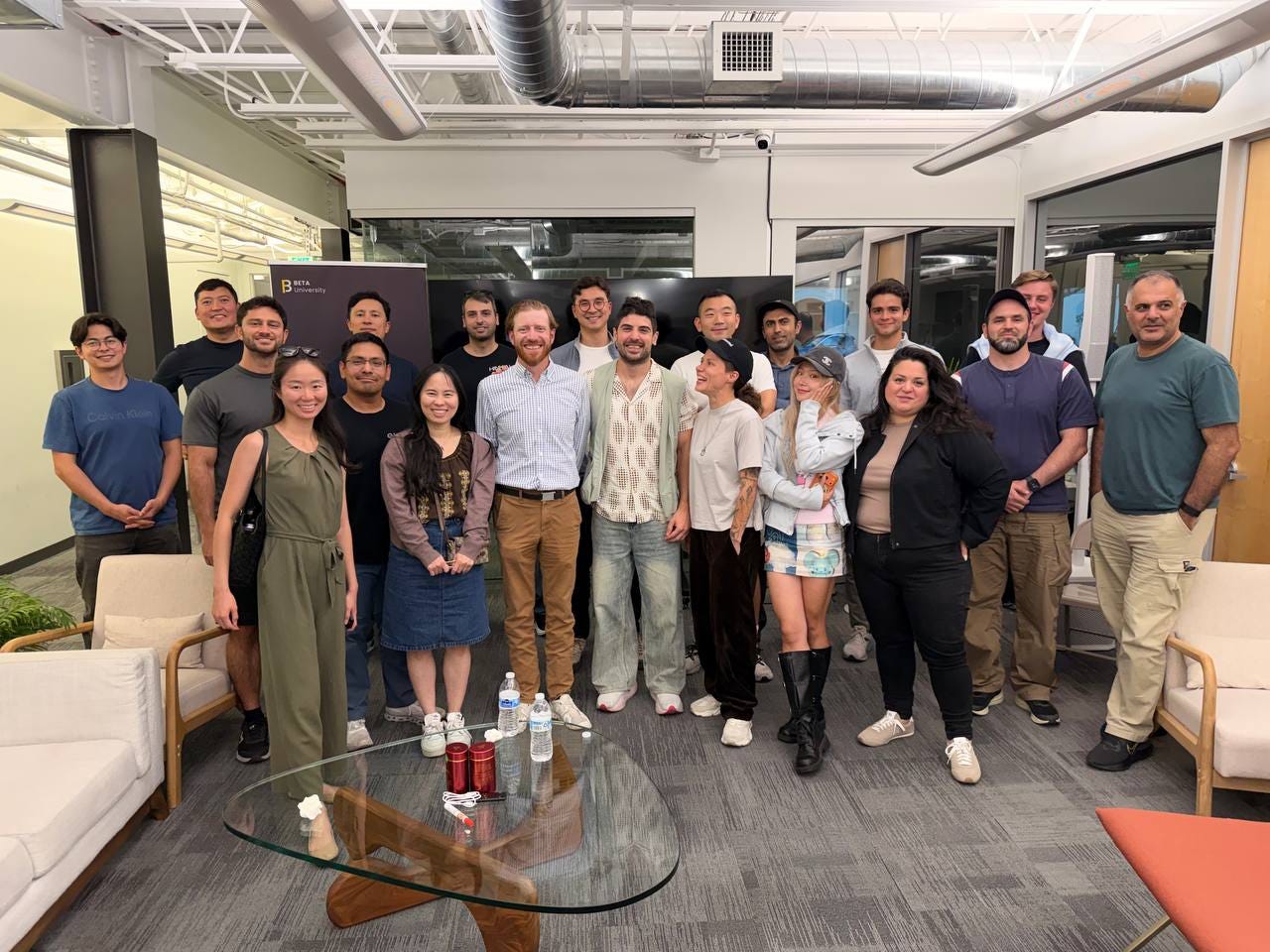
Here they are:
What they build. Wireless synchronization precise enough that distance becomes a geometry problem. Light travels about a foot per nanosecond, so once radios are synchronized tightly enough, position falls out. It runs on the Wi-Fi and 5G already installed in a building, software only, no tags and no new hardware. Standard enterprise Wi-Fi location gets you to roughly ten meters. Getting inside one meter is where the use cases start.
The infrastructure bottleneck is radio. The consensus conversation is compute, power and chips. Eric’s argument is that communication networks run out first. If physical AI goes where this room believes it goes, there will not be enough sensors or waveforms to carry it. Dense cities can support it, most of a large country cannot. And it has the shape of the EV charging standoff: everyone wants the infrastructure, nobody wants to fund the first mile.
The unit of the problem is the fleet. A camera can tell one robot where the table is. The commercial question is a hundred robots in a warehouse or a hundred drones in an airspace, coordinated safely alongside people. That is a coordination layer, and it is a different business from building either the model or the machine.
Radio is a sensor layer that is already deployed. You cannot move through a propagating wave without disturbing it. Every Wi-Fi and 5G network in the world is producing this signal today and almost nobody is reading it. The camera story of the last thirty years is about to repeat with radio, and 5G is where the next push happens.
On world models. A blueprint of a space is close to useless on its own. What you need is the blueprint, plus where everything currently is, plus what it is likely to do next, with the lag to reality driven toward zero.
On the company. Nine years of building, no press until this year, a first product line they shut down along the way. Eric was open about the identity crisis that followed and about keeping every dollar in the business rather than taking money off the table. That candor is the part of these dinners I value most.
The question I left with. If a network can assert where every person and machine in a space is, that assertion becomes valuable enough that someone will want to forge it. Verifying physical position to a third party, without handing over the underlying trace, feels like the next solution.
Thanks to Alma and Beta University for supporting Icons.