
Last week, we had a chance to host Jonathan Siddharth, founder of Turing, for Icons.
When you talk to Jonathan, it feels like he processes everything through a purely factual lens of causes and outcomes. Most of us draw takeaways through the filter of our own experiences. What Jonathan does differently is strip away the bias and analyze events almost from a machine-learning perspective.
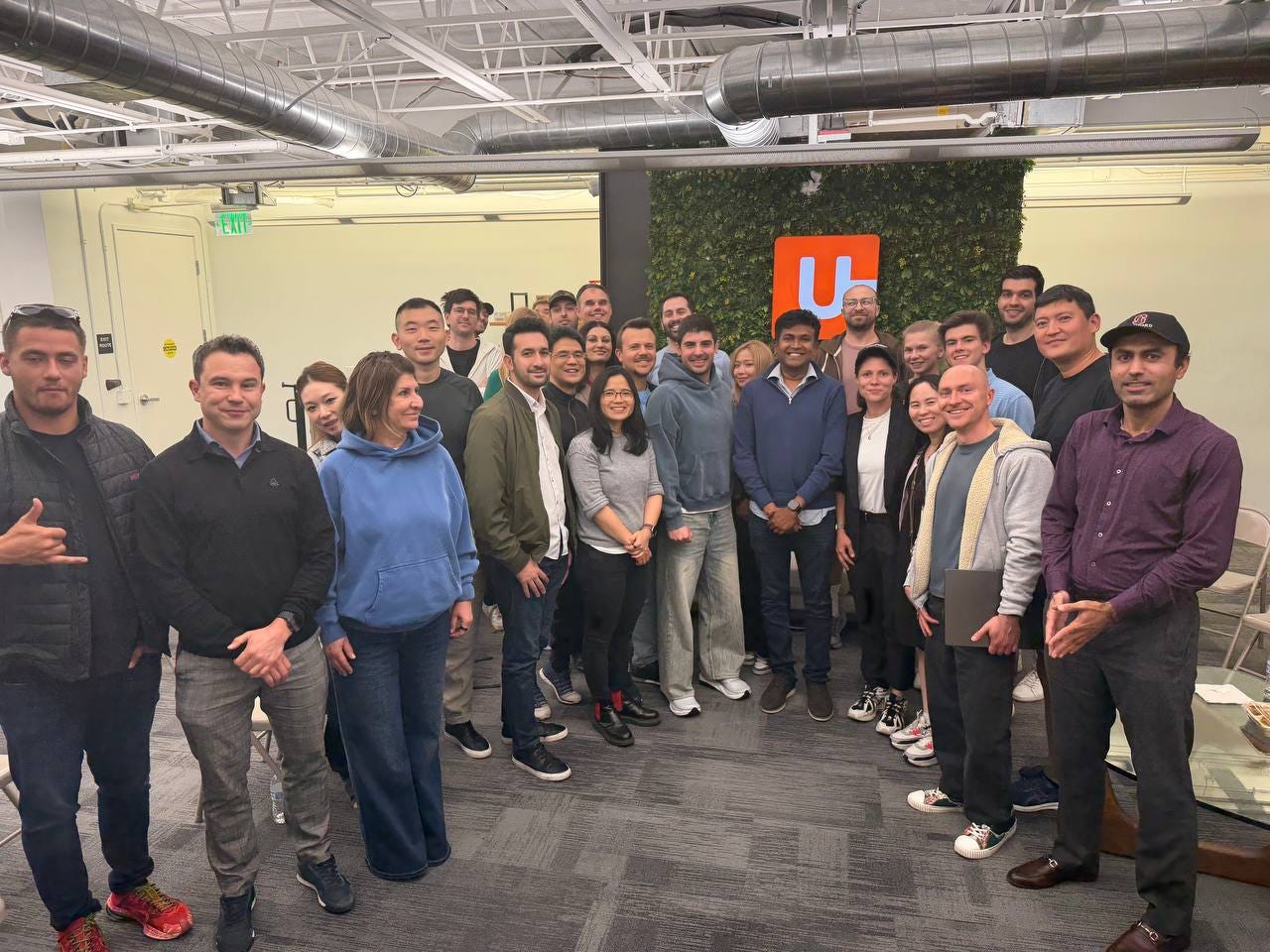
One of the most fascinating and insightful conversations we’ve had at Icons.
Here are a few takeaways:
• What was refreshing to hear is that Jonathan isn’t the stereotypical Zuckerberg-style founder who succeeded on the first try. His first startup didn’t work out the way he intended. Right after Stanford CS, Jonathan started a company in Silicon Valley and spent seven years building it before reflecting on what went wrong. The answer wasn’t Jonathan. It was the market. He was attached to an idea that simply didn’t have a large enough market. He was stubborn. He believed it could be huge. But that’s not what the market demanded.
• In situations like that, Jonathan suggests being less stubborn. Give yourself the freedom to think differently. Go talk to 100 ICPs and verify whether they actually care about the problem you’re trying to solve. If the answer is yes, go solve it. If the answer is no, pivot away. Not just pivot slightly, but jump away from what you had before - teleport. All your existing collateral can become a curse when you’re trying to find a truly great startup idea.
• But what about insights? Didn’t we learn at Stanford that we should stick with an “insight,” following Andy Rachleff’s Product-Market Fit framework? Jonathan’s view is: challenge your insight. Most insights only exist within a specific time horizon. Imagine having a brilliant insight around automation before 2023. Then ChatGPT arrives. Do you still hold on to that insight? Probably not. Humble yourself. Your insight may no longer be true. Don’t become attached to the dream.
• Okay, you’ve pivoted and your old insight is no longer valid. What’s next? Go all in. Jump into the new thing that excites you most. Don’t underestimate your ability to develop new insights. If you’re smart and curious, you’ll go deep and find them again, but this time inside a market that’s actually growing fast enough to matter.
• When Jonathan started Turing, OpenAI called and asked how many people he could dedicate to expert-skill labeling. He wanted to say an even bigger number because the demand was so overwhelming. The market signal was impossible to ignore. In just a few years, Turing grew to hundreds of millions ARR. Today, it serves many of the leading AI labs and also helps enterprises adopt AI by connecting them with the best solutions available.
• Is the opportunity around data labeling limited? Eventually, yes. But not anytime soon. Jonathan’s view is that we’re still decades away from fully automating the process. At the same time, Turing has built a second business that leverages the latest AI models and innovations to help enterprises deploy AI directly into their operations.
• How would Jonathan screen for startup ideas? He would look for highly fragmented markets with mostly analog competitors. Real estate is one example: fragmented, less technology-driven, and deeply connected to the physical world.
• Another way to think about opportunities is to become an input to AI companies. What will they need to reach the next level? It could be data. It could be infrastructure. It could be something entirely different.
• Jonathan believes founders need to stay several years ahead of competitors. How do you get ahead? Reading books isn’t enough. You need high-variance learning so you don’t get trapped in a local minimum. That means constantly meeting new people, exposing yourself to new ideas, and learning from what others have built, especially in Silicon Valley, where the density of ambitious and talented people remains incredibly high.