

We hosted Michael Polansky, co-founder and CEO of Outer Biosciences. Outer Bio is a discovery company for skin bioactives, using clinically relevant human-skin data and machine learning to discover novel bioactives.
We talked about why biotech is entering an exciting new era, how new technologies could change the way discovery works in biology, and where some of the biggest opportunities in the industry may emerge. We also spent a lot of time discussing what it actually takes to build a team across very different scientific and business disciplines and allocate capital when development cycles are long.
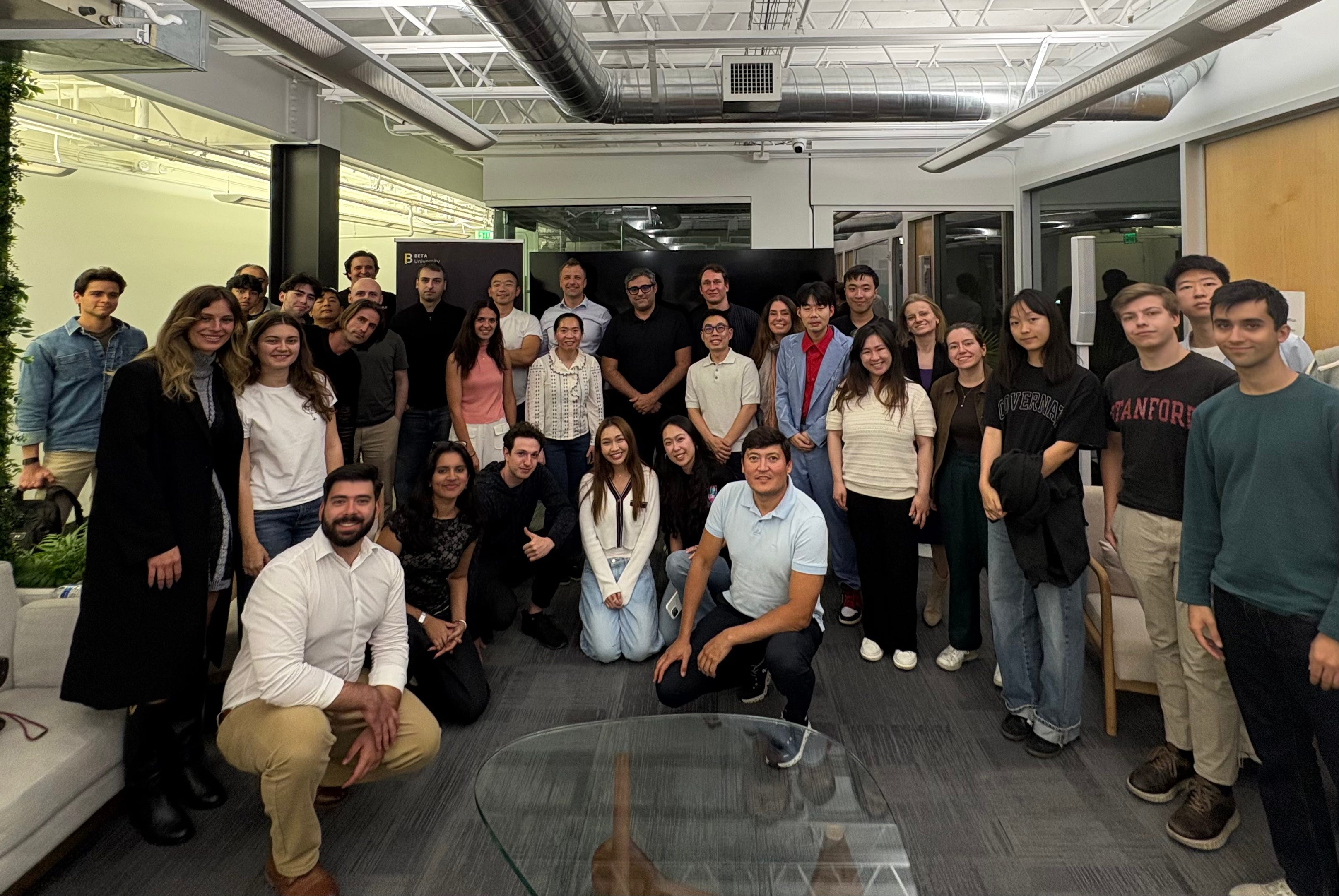
Here are a few insights from the event:
1. The bottleneck for AI in biology is the lack of better ground truth
Michael’s view is that AI has already made enormous progress where biology has more available and curated data, including genomics and transcriptomics. The harder problem begins when you ask what actually happens inside a human. AI models are advancing quickly, while high-quality data about human biology remains scarce. The opportunity is increasingly in generating better data and building the bridge between laboratory models and what actually happens in humans.
2. Tissue might be the missing layer in AI biology
Much of AI biology today operates relatively far upstream: genomics, proteins, and cells. Outer Bio is making the opposite bet and moving closer to the human by working with actual living tissue. Michael thinks this could eventually become a category of its own: producing AI-ready data at the tissue level for different biological systems.
3. At Outer Bio, 99% of the value is the proprietary data it generates
Michael estimated that 99% of Outer Bio’s value in AI comes from the proprietary data it generates and how well that data is labeled and structured. That is a useful counterweight to how AI companies often pitch themselves. In a domain like this, the specific model may matter much less than the ability to generate unique, well-labeled, structured data.
4. If he started again, he would still work on the same problem: translation from the lab to the human body
When asked what he would build if he were not working on Outer Bio, Michael came back to the same problem: obtaining scalable data that links laboratory biology to what happens clinically in humans. Clinical trials are not high-scale enough to generate the volume of data needed.
5. The biggest thing he had to unlearn from VC was pattern matching
Pattern matching is necessary in venture because you see too many companies to deeply understand every one. That heuristic helps an investor move quickly, but it is less useful when you are actually building. As a founder, he had to relearn how to slow down, go deep on a problem, and have confidence that he could understand unfamiliar technical material if he spent enough time on it.
6. Building companies is a talent business
Michael described entrepreneurship and venture capital as a talent business. Over a career you accumulate a roster of exceptional people you know, have worked with, or have heard about. Occasionally the right people become available around the right problem at exactly the right moment. Outer Bio came together that way.
7. Professional investors bring more than capital
Michael prefers bringing in professional investors rather than fully self-funding. Experienced investors bring strategic insights, external validation, deep industry knowledge, and access to valuable networks in addition to capital. His broader point was that time is a stronger signal of founder conviction than money.
Michael, thank you for your time and for sharing your insights with us!
Thanks to Beta University for supporting the event.