
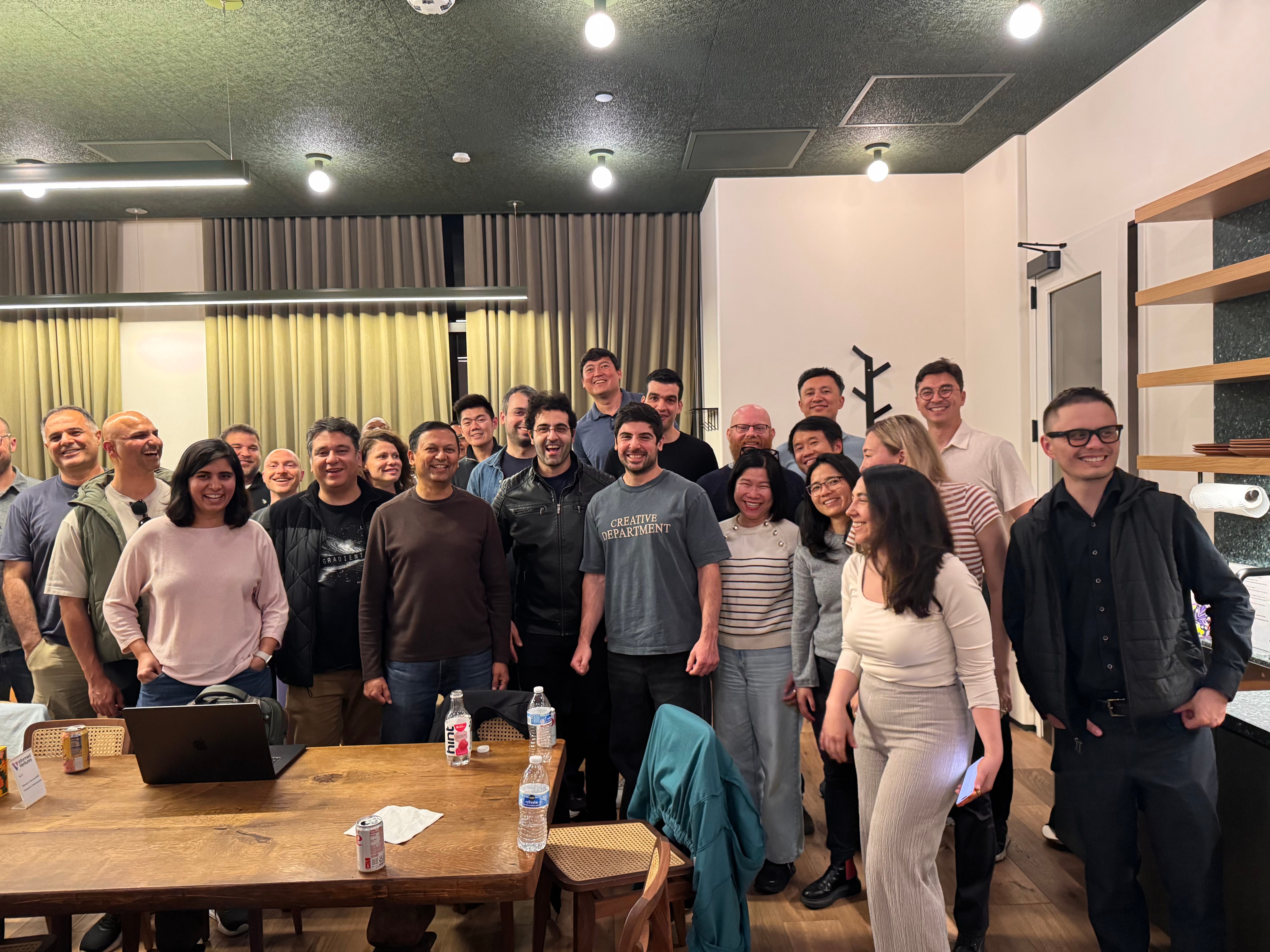
Last week, we hosted Sri Viswanath for an Icons dinner.
Sri was previously CTO of Atlassian, later Head of Ventures at Coatue, where he managed investments across a multi-billion-dollar platform.
He recently left to build Sycamore.
When I asked him why he walked away from one of the top venture positions in the industry, his answer was immediate:
“There’s no better time to build. Generational companies are going to be built now.”
Here are a few takeaways from the conversation:
1. There’s probably never been a better time to build than right now.
Software is changing at record speed. Entire assumptions around how products are built, teams are structured, and value is created are being rewritten in real time.
The old software stack is slowly dissolving underneath us while a completely new one is emerging.
2. Lean companies will disproportionately win in the AI era.
Organizations that can rethink workflows from scratch and rebuild around AI-native operations will move dramatically faster than incumbents defending legacy processes.
Historically, changing the rules inside an existing system has often been harder than building a new one entirely.
3. Incumbents may still benefit massively from AI.
While startups move faster, enterprises already have customers, workflows, distribution, and operational inefficiencies worth billions.
Once AI deployment becomes reliable enough, the ROI for large organizations could materialize almost overnight.
4. Sri’s perspective on layoffs and restructuring was surprisingly calm.
His view was that most of today’s turbulence is transitional rather than existential.
AI will eliminate some functions, but it will also create entirely new categories of work, products, and companies.
Especially in Silicon Valley, ambitious and adaptive people tend to regroup quickly. The long-term impact may ultimately become far more productive than destructive.
5. One of the most interesting experiments Sri runs today is a Slack environment where AI agents communicate autonomously with each other.
Not humans prompting models one by one.
Agents coordinating, delegating, responding, and operating together inside shared workflows.
It hints at software evolving from passive tools into active organizational participants.
6. The future org chart may become dramatically smaller than people expect.
A large portion of middle layers inside organizations primarily exist to move information, summarize context, coordinate teams, and route decisions.
AI increasingly attacks exactly those functions.
7. At Sycamore, Sri’s core bet is that enabling AI at scale inside enterprises requires far more than simply plugging into existing models.
The hard part is orchestration, permissions, workflows, memory, governance, and reliability across large organizations.
The winners won’t just be companies building models.
They’ll also be the companies building the operational layer that allows enterprises to deploy AI safely and effectively at scale.
Thanks to Alma and Informed Ventures for supporting Icons!